Shoes go through a lot every day. From crowded streets and rough floors to accidental contact with furniture, doors and other footwear, scratches and scuff marks are almost unavoidable.
The good news is that many light scratches are only surface marks and can be improved with the right cleaning and care routine. The important part is knowing what material you are dealing with before trying to remove the mark.
Leather, synthetic leather, suede, nubuck, mesh and canvas all require different approaches.
Here is a simple Helios guide to dealing with common shoe scratches and scuffs.
What Is the Difference Between a Scratch and a Scuff?
A scuff usually affects the surface without seriously damaging the material. It may appear as a dark mark, light streak or rubbed area.
A scratch can be deeper and may actually cut into the material or remove some of its colour.
This difference matters because surface marks can often be cleaned or polished, while deep scratches may require colour restoration or professional repair.
1. Start by Cleaning the Shoe
Never try to polish or treat a scratched area while the shoe is covered in dust.
Start by:
- Removing loose dirt with a soft brush
- Wiping the surface with a microfiber cloth
- Cleaning the affected area with a suitable shoe cleaner
- Allowing the shoe to dry naturally
Once the surface is clean, you can determine how serious the scratch actually is.
Sometimes what looks like a scratch is simply transferred dirt from another surface.
2. How To Remove Scuffs From Leather Shoes
Smooth leather is one of the easier materials to maintain.
For light scuffs:
- Brush away dust.
- Clean the affected area gently.
- Apply a small amount of suitable leather cream.
- Rub it gently into the surrounding leather.
- Allow it to settle.
- Buff with a soft cloth or brush.
For coloured leather, use a cream or polish that closely matches the original colour.
Avoid applying a large amount of product to one small area because it can create an uneven finish.
3. How To Deal With Deeper Leather Scratches
A deep scratch may remove part of the leather's surface or colour.
Cleaning alone cannot completely restore missing material.
For deeper damage:
- Clean the area first
- Allow it to dry
- Use a suitable colour-restoration product if appropriate
- Apply small amounts rather than one heavy layer
- Blend carefully with the surrounding area
For expensive leather footwear with significant cuts or damage, professional shoe repair may be more appropriate.
4. How To Remove Scuffs From White Sneakers
White sneakers show even the smallest marks.
Begin by cleaning the affected area with a suitable sneaker cleaner and soft brush.
For the upper:
- Use gentle pressure
- Avoid harsh chemicals
- Wipe away cleaning residue
- Dry naturally
For rubber midsoles:
- Use a separate medium-bristle brush
- Clean the rubber carefully
- Wipe away dirty foam
Do not use bleach simply because the shoe is white. Harsh chemicals can damage the material or cause uneven discolouration.
5. How To Remove Scuffs From Synthetic Leather
Synthetic leather usually has a coated surface, so aggressive scrubbing should be avoided.
For light marks:
- Remove dust.
- Use a microfiber cloth with suitable shoe cleaner.
- Rub gently.
- Wipe clean.
- Let the shoe dry.
If the scratch has removed the synthetic coating itself, cleaning will not restore the missing layer.
Avoid:
- Acetone
- Nail-polish remover
- Bleach
- Strong solvents
- Abrasive scrubbers
These can make peeling and cracking worse.
6. What About Suede and Nubuck?
Suede and nubuck should not be treated like smooth leather.
If the surface has a light mark:
- Make sure the shoe is dry.
- Brush gently with a suitable suede or nubuck brush.
- Use an appropriate eraser for stubborn surface marks.
- Brush again to restore the texture.
Avoid regular leather cream and polish.
Do not aggressively rub wet suede because this can permanently alter the texture.
7. How To Handle Scratches on Mesh Shoes
Mesh is more delicate than leather and synthetic materials.
A scratch may actually be damaged or pulled fabric.
For surface dirt:
- Use a soft brush
- Apply suitable sneaker cleaner
- Work gently
- Wipe with a microfiber cloth
If fibres are pulled or torn, avoid brushing the area repeatedly.
Cleaning cannot repair physically damaged mesh. A small loose thread can sometimes be carefully secured, but larger tears may require professional repair or replacement.
8. Don't Forget the Shoe Soles
Sometimes a shoe looks scratched when the real problem is dirty rubber.
Check:
- Midsole
- Outsole
- Heel
- Toe edge
Use a separate brush for the sole.
A medium brush can be used on durable midsoles, while a firmer brush is more appropriate for rubber outsoles and tread.
Keeping sole-cleaning tools separate prevents road grime from being transferred back onto the upper.
9. How To Prevent Future Scratches
Prevention is easier than repairing repeated damage.
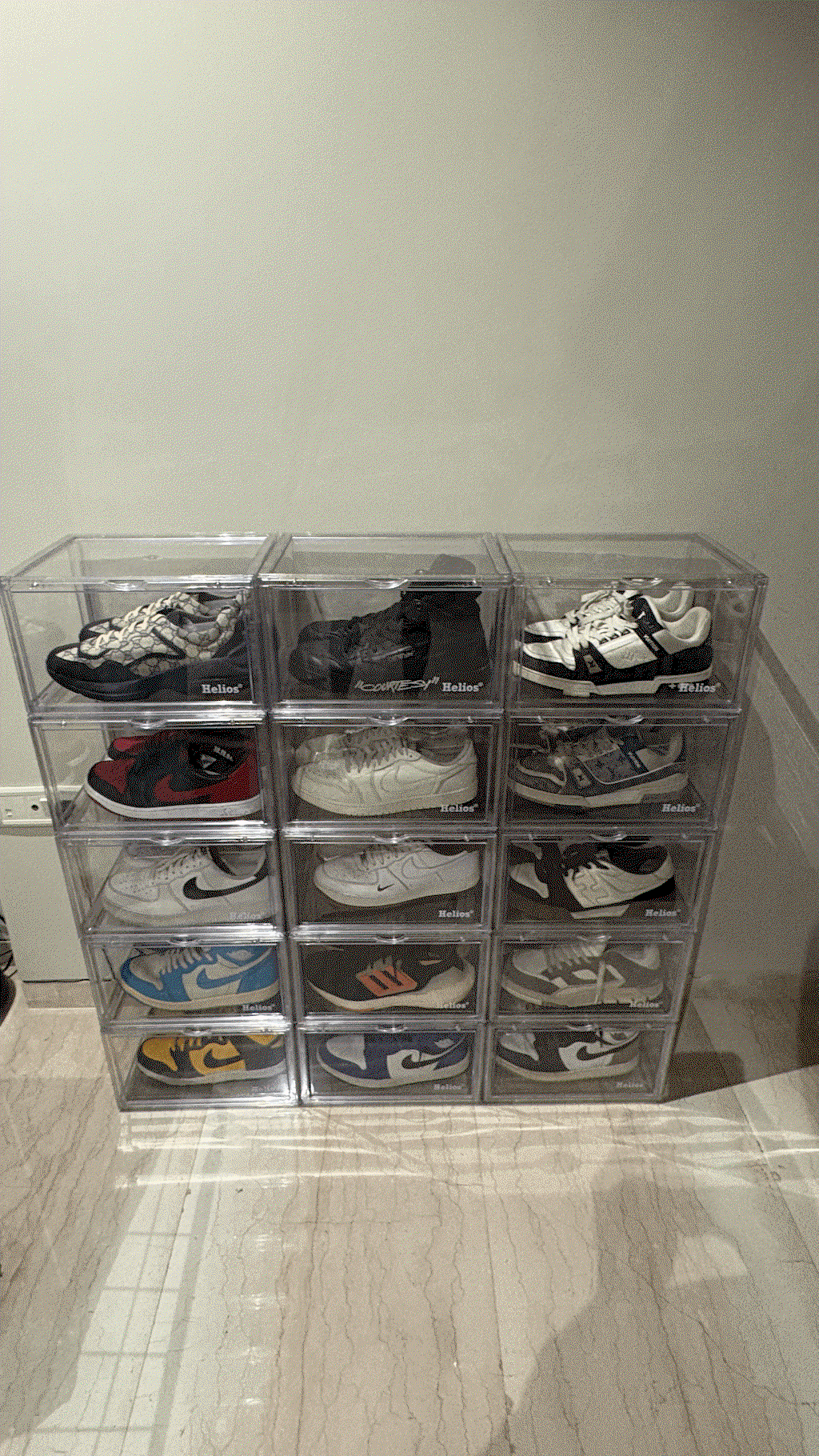
Use proper storage
Keep shoes separated instead of piling them together.
Avoid crushing footwear
Heavy shoes placed on top of sneakers can deform and scratch them.
Use shoe trees or shapers
These help suitable footwear maintain its shape and reduce unnecessary creasing.
Clean regularly
Removing dust reduces surface friction and keeps marks from becoming deeply embedded.
Rotate your footwear
Using different pairs gives each shoe time to air and reduces repeated wear on the same areas.
10. Protect Shoes After Cleaning
Once your shoes are clean and completely dry, a suitable water and stain repellent can help protect compatible materials from everyday moisture and stains.
Before applying any protector:
- Clean the shoe.
- Allow it to dry completely.
- Test the product on a hidden area.
- Apply a light, even layer.
- Allow it to dry before wearing.
Always check whether the product is suitable for the specific material.
11. Common Mistakes When Removing Shoe Scratches
Avoid these common mistakes:
- Scrubbing aggressively
- Using household chemicals
- Applying bleach to white shoes
- Using leather polish on suede
- Using a hard brush on mesh
- Using solvents on synthetic leather
- Trying to polish over dirt
- Applying too much cream or polish
- Drying shoes with direct heat
A gentle approach is usually safer and produces a more consistent result.
Simple Shoe Scratch Repair Routine
For light marks
Clean → Dry → Treat → Buff
For suede or nubuck
Dry → Brush → Erase → Brush
For deep scratches
Clean → Assess → Restore colour if appropriate → Professional repair if necessary
Knowing when to stop cleaning is just as important as knowing how to clean.
Why Helios Is Useful for Everyday Shoe Care
A practical Helios shoe-care setup can include:
- Shoe and sneaker cleaners
- Soft and medium cleaning brushes
- Microfiber cloths
- Leather care products
- Shoe polish
- Suede and nubuck care products
- Water and stain protection sprays
- Shoe deodorizers
- Storage solutions
- Footwear accessories
The basic maintenance cycle is:
Clean → Treat → Protect → Store
Regular care helps prevent small scuffs from becoming bigger footwear problems.
Final Thoughts
Not every scratch means your shoes are permanently damaged.
Many everyday scuffs can be improved with simple cleaning and material-appropriate care. The key is to identify the footwear material first and avoid aggressive cleaning methods.
For leather, focus on gentle cleaning and suitable conditioning or polishing. For suede and nubuck, brush rather than polish. For mesh, use minimal pressure. For synthetic leather, avoid harsh chemicals.
With regular Helios-style shoe care, you can keep your footwear looking cleaner, fresher and better maintained for longer.
Shop Helios Shoe Care Essentials
Explore Helios shoe cleaners, brushes, microfiber cloths, protect sprays, deodorizers, insoles, storage solutions and footwear care accessories.
Website: Visit Website
All Products: All Products
Follow Helios India
Contact Helios India
Helios Global Private Limited
Plot No. 95 & 96, HSIIDC, Sector-56, Phase-4,
Kundli Industrial Area, Sonipat – 131028, Haryana, India
Phone: 1800114252
Email: care@heliosindia.com
 Customized Helios Abode Sneaker Storage Box (Side Drop)
Rs. 5,599.00
Customized Helios Abode Sneaker Storage Box (Side Drop)
Rs. 5,599.00