Running shoes work harder than most footwear. Every run exposes them to sweat, road dust, mud, moisture and repeated impact. Over time, the upper starts looking dull, midsoles collect stains and the inside can develop an unpleasant odour.
The obvious solution may seem to be throwing them into a washing machine or soaking them in detergent. Unfortunately, aggressive cleaning can damage mesh, weaken adhesives and affect the structure of performance footwear.
Running shoes need a gentler approach.
This guide explains how to clean, dry, deodorize and maintain running shoes safely using a practical Helios-style shoe care routine.
1. Why Running Shoes Need Special Cleaning
Running shoes are designed differently from ordinary casual footwear.
A typical running shoe may contain:
- Lightweight mesh
- Engineered knit
- Synthetic overlays
- Foam cushioning
- Rubber outsole sections
- Padded heel lining
- Removable insoles
- Adhesive bonding between multiple layers
These materials are selected to keep footwear lightweight, breathable and comfortable.
Aggressive washing can affect these properties.
Common running shoe problems include:
- Dust trapped inside mesh
- Mud around the outsole
- Sweat inside the lining
- Persistent odour
- Dirty midsoles
- Flattened insoles
- Stains around the toe
- Reduced freshness after frequent use
Regular gentle cleaning helps manage these problems without unnecessarily stressing the shoe.
2. Avoid Putting Running Shoes in the Washing Machine
Machine washing may seem convenient, but it can expose running shoes to excessive water, detergent and movement.
This may contribute to:
- Adhesive deterioration
- Foam deformation
- Damage to delicate mesh
- Changes in shoe shape
- Colour fading
- Longer drying times
A controlled hand-cleaning routine is generally much safer.
It also allows you to clean individual areas according to how dirty they are instead of soaking the entire shoe.
3. What You Need To Clean Running Shoes
Keep the cleaning setup simple:
- Helios sneaker or shoe cleaner
- Soft or medium-bristle shoe brush
- Microfiber cloth
- Small bowl of clean water
- Shoe deodorizer
- Clean absorbent paper
- Water and stain repellent spray where suitable
You do not need harsh detergents or complicated home remedies.
4. Step 1: Remove Laces and Insoles
Before cleaning the shoe, remove the laces.
If the insole is removable, take that out as well.
This gives you easier access to:
- Tongue
- Eyelet area
- Interior
- Toe section
- Areas beneath the laces
It also allows the insole and shoe to dry separately.
Running shoe insoles absorb a significant amount of sweat, so airing them separately is an important part of footwear hygiene.
5. Step 2: Remove Loose Dust and Mud
Do not immediately add water to a dusty shoe.
First:
- Let wet mud dry slightly if necessary.
- Tap the soles gently together.
- Use a shoe brush to remove loose dirt.
- Brush the mesh and upper gently.
- Clean dust around the midsole and heel.
Dry brushing removes a surprising amount of dirt and prevents it from turning into muddy residue once water is introduced.
6. Step 3: Clean the Upper Gently
Running shoe uppers are often made from breathable mesh or engineered fabric.
These materials should be cleaned carefully.
Cleaning method
- Dip a soft brush lightly in water.
- Add a small amount of suitable Helios sneaker cleaner.
- Work on one section at a time.
- Use gentle circular movements.
- Allow the foam to loosen dirt.
- Wipe away dirty foam with a microfiber cloth.
Avoid pressing aggressively into the mesh.
Gentle repetition is safer than heavy scrubbing.
7. Pay Extra Attention to Mesh
Mesh makes running shoes breathable, but its open structure also traps dust.
When cleaning mesh:
- Use a softer brush
- Apply minimal pressure
- Avoid excessive water
- Do not pull at the fabric
- Wipe foam away carefully
Hard scrubbing can make mesh look fuzzy or potentially damage delicate fibres.
If dirt remains after the first clean, repeat the process lightly instead of increasing pressure.
8. Clean the Midsole Separately
Midsoles often become dirty much faster than the upper.
Road dust and grime commonly leave:
- Grey marks
- Mud stains
- Scuffs
- Dark heel edges
Use cleaner with a slightly firmer brush on the midsole.
Focus on:
- Sidewalls
- Heel section
- Toe edge
- Textured foam areas
Be careful not to scrub delicate exposed foam aggressively.
A clean midsole can make an older running shoe look significantly fresher.
9. Clean the Outsole and Grooves
The outsole comes into direct contact with roads, tracks and trails.
It can collect:
- Mud
- Small stones
- Grass
- Road grime
- Dust
Use a firmer brush to clean the outsole.
Pay attention to grooves and tread patterns where dirt becomes trapped.
Removing debris is particularly useful after trail running or running on muddy surfaces.
10. How To Clean Running Shoe Insoles
Insoles absorb sweat and can become a major source of odour.
Basic care routine
- Remove them from the shoe
- Brush away dry debris
- Wipe gently with a slightly damp cloth where appropriate
- Avoid soaking foam insoles
- Let them air-dry completely
Do not place wet insoles back into running shoes.
If an insole remains unpleasant-smelling or has permanently flattened, replacement may be more effective than repeated cleaning.
11. How To Wash Running Shoe Laces
Laces can make otherwise clean running shoes look dirty.
Remove them and clean separately.
Use mild soap and water, rinse thoroughly and allow them to dry naturally.
Replace laces when they become:
- Frayed
- Permanently stained
- Stretched
- Difficult to tie securely
Fresh laces are a simple way to refresh the appearance of an older pair.
12. How To Dry Running Shoes Correctly
Correct drying is critical because running shoes contain foam, adhesives and multiple bonded layers.
Safe drying method
- Remove the insoles
- Keep the tongue open
- Stuff the shoes lightly with absorbent paper
- Replace wet paper when needed
- Leave the shoes in a shaded, ventilated area
- Allow them to dry completely
Avoid
- Hairdryers
- Room heaters
- Radiators
- Direct intense sunlight
- Clothes dryers
High temperatures can affect adhesives and potentially deform cushioning materials.
Natural drying takes longer but is much safer.
13. How To Remove Odour From Running Shoes
Sweat is unavoidable when running. Odour becomes a problem when moisture remains trapped inside the footwear.
Follow this routine:
- Remove shoes soon after finishing your run.
- Take out the removable insoles.
- Allow both shoes and insoles to ventilate.
- Ensure they are dry.
- Apply Helios shoe deodorizer inside.
- Keep the shoes open for some time after application.
Do not leave sweaty running shoes inside a gym bag overnight.
That creates the perfect environment for unpleasant odour.
14. Rotate Your Running Shoes
Regular runners may benefit from rotating footwear instead of using the same pair every day.
Rotation gives each pair additional time to:
- Dry completely
- Release trapped moisture
- Air out
- Recover between uses
A second pair can be particularly useful during humid or rainy weather when drying takes longer.
15. Protect Running Shoes From Stains
A suitable water and stain repellent spray can help protect certain running shoe uppers from light moisture and everyday stains.
Application
- Clean the shoes first.
- Allow them to dry completely.
- Spray lightly from approximately 15–20 cm away.
- Cover the upper evenly.
- Let the shoes dry before wearing.
Always verify that the protector is suitable for the specific material.
Protection does not make every running shoe completely waterproof, but it can make routine maintenance easier.
16. How Often Should You Clean Running Shoes?
Cleaning frequency should depend on usage rather than following a rigid schedule.
After most runs
- Air the shoes
- Remove loose dirt
- Check the outsole
- Allow insoles to dry
After dusty or muddy runs
- Brush thoroughly
- Clean visible dirt
- Clean the outsole
Periodically
- Give the shoes a more complete cleaning
- Clean or replace insoles
- Deodorize
- Check laces and the overall shoe condition
Regular light care is generally preferable to aggressive deep cleaning.
17. Signs Your Running Shoes Need More Than Cleaning
Cleaning improves hygiene and appearance, but it cannot restore structural wear.
Inspect your running shoes regularly for:
- Severely worn outsole tread
- Uneven sole wear
- Damaged mesh
- Torn heel lining
- Compressed cushioning
- Loose bonding
- Significant changes in comfort
If the shoe structure is badly worn, cleaning will not restore its original performance.
Shoe care extends useful life, but it cannot replace worn-out performance components.
18. Running Shoe Storage Tips
Once clean and dry, running shoes should be stored properly.
Avoid leaving them:
- Inside gym bags
- In hot cars
- Near direct sunlight
- In damp cupboards
- Under heavy footwear
Instead:
- Keep them in a cool, dry area
- Make sure they are fully dry
- Use organised shoe storage
- Keep frequently used running shoes easily accessible
- Store premium pairs away from dust
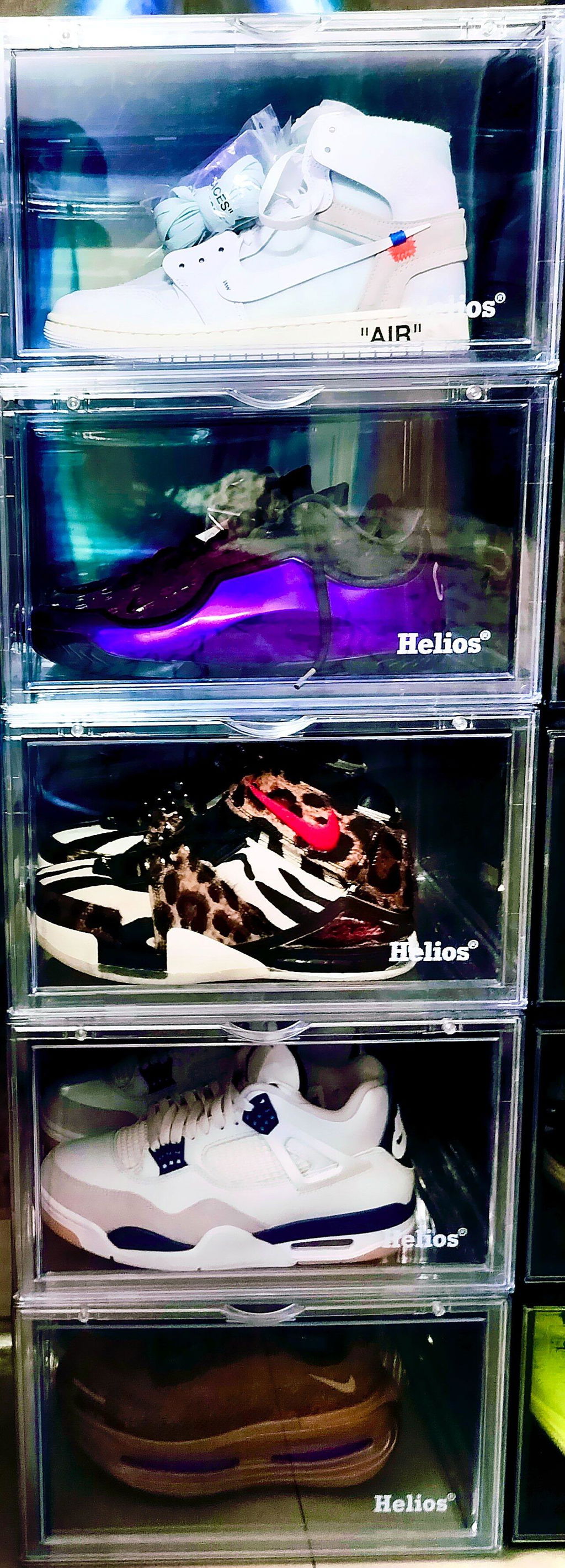
Helios Abode Sneaker Storage Boxes can also be used for organised sneaker storage once footwear is completely dry.
19. Common Running Shoe Care Mistakes
Avoid these habits:
- Washing shoes in a washing machine
- Soaking them in detergent
- Scrubbing mesh aggressively
- Drying with direct heat
- Leaving sweaty shoes in a closed bag
- Storing shoes while damp
- Ignoring dirty insoles
- Wearing one wet pair repeatedly
- Using harsh household chemicals
- Applying products without checking material compatibility
A gentle routine is usually all running shoes need.
20. Simple Running Shoe Care Checklist
After your run
- Air the shoes
- Remove insoles if sweaty
- Brush away loose dirt
- Check the outsole
After muddy or dusty use
- Clean the upper gently
- Clean the midsole
- Brush outsole grooves
- Dry naturally
Regular maintenance
- Deodorize the inside
- Check insoles
- Clean laces
- Apply suitable protection
- Store only when completely dry
This routine keeps running footwear cleaner, fresher and ready for the next session.
Why Helios Is Useful for Running Shoe Care
A complete Helios-style running shoe care setup can include:
- Sneaker cleaner for regular cleaning
- Soft shoe brushes for mesh and uppers
- Microfiber cloths for wiping
- Water and stain repellent spray for suitable materials
- Shoe deodorizer for freshness
- Comfort insoles for appropriate everyday footwear
- Storage and footwear accessories
The principle is simple:
Clean → Dry → Freshen → Protect → Store
Consistent care helps running shoes stay presentable and hygienic without exposing them to unnecessary aggressive washing.
Final Thoughts
Running shoes are built to move, but that does not mean they should be washed aggressively.
The safest routine is straightforward:
Remove loose dirt. Clean the upper gently. Keep water controlled. Clean the outsole separately. Dry naturally. Deodorize after drying. Store properly.
With regular Helios-style care, running shoes can remain cleaner, fresher and more comfortable throughout their useful lifespan.
Shop Helios Running Shoe Care Essentials
Explore Helios shoe cleaners, brushes, microfiber cloths, protect sprays, deodorizers, insoles and footwear care accessories.
Website: Visit Website
All Products: All Products
Follow Helios India
Contact Helios India
Helios Global Private Limited
Plot No. 95 & 96, HSIIDC, Sector-56, Phase-4,
Kundli Industrial Area, Sonipat – 131028, Haryana, India
Phone: 1800114252
Email: care@heliosindia.com
 Customized Helios Abode Sneaker Storage Box (Side Drop)
Rs. 5,599.00
Customized Helios Abode Sneaker Storage Box (Side Drop)
Rs. 5,599.00